


Board Review Series-Pathology
0.00.00 Reviews
App Specs
- Version
- 4.16.0
- Updated On
- License
- Free
- Downloads
- 10,000+
- Developer
- Skyscape Medpresso Inc
- Categories
- Medical
- Platform
- Android
Screenshots
 Analysis by AppCompare
Board Review Series-Pathology is the kind of medical study app I would recommend when you already have a pathology foundation and want a focused way to test whether that knowledge holds up under exam-style pressure. It is not a replacement for a textbook, lecture series, or full clinical question bank. Its value is narrower and more practical: it places pathology review questions alongside answers and rationales, giving me a way to move from passive reading into active recall.
That distinction matters. When I read a chapter in a conventional resource, it is easy to feel familiar with the material without being able to retrieve it quickly. This app pushes me to commit to an answer first, then inspect the explanation. For medical students preparing for USMLE-style assessments, that change in workflow is the main reason to consider it. It works best as a question-driven companion, not as the only pathology resource on your device.
How the question-and-rationale format helps
The app is a medical study tool from Skyscape Medpresso Inc., built around the Board Review Series approach. Its central offering is more than 450 USMLE-style questions, with answers and rationales placed at the end of the chapters. I found that arrangement useful because it encourages a deliberate first pass: read the question, choose an answer, and only then turn to the explanation instead of immediately relying on recognition.
The placement of the rationales also changes how I use it compared with a quick-answer quiz app. I can treat a chapter as a compact study session, work through the questions, and then review the reasoning in one concentrated block. That is particularly helpful when several answer choices seem plausible. The explanation becomes an opportunity to identify the discriminating clue rather than merely checking whether my letter choice was correct.
For pathology, that habit is important. Many questions are not difficult because the disease name is unfamiliar; they are difficult because the presentation, mechanism, morphology, and laboratory findings must be connected. A rationale can expose which link I missed. If I selected an answer because of one memorable symptom while ignoring the underlying mechanism, the review makes that mistake easier to recognize and correct.
I would not use the app by simply tapping through questions as quickly as possible. A better routine is to write down, mentally or on paper, why each wrong option is wrong. This is one of the less obvious benefits of a rationale-based resource: the distractors can teach me where my boundaries of understanding are. A question about a tumor, inflammatory process, or genetic disorder often becomes more useful when I compare the chosen answer with the alternatives instead of reading only the correct explanation.
The app is also well suited to short, repeatable sessions. I can use it after studying a pathology topic from another source, then return later to see whether the information is still available without prompting. That makes it more useful for spaced review than for a single long reading session. The questions provide a natural stopping point, while the rationales show me which subjects deserve another look in a larger reference.
Worth Reading Before You Choose

EA SPORTS FC Mobile 26 Is a Bigger Football Game, but It Takes Time

Flipboard Shows What News Apps Must Do Beyond the Feed

Switching to Android Auto Means Rethinking Your Driving Routine

Google Calendar Makes a Crowded Week Easier to Manage

Ludo King Makes the Most of the Minutes Between Plans

Baby Panda World Brings Quick Play to Modern Phones, but Its Game Library Feels Busy
Where it fits beside textbooks and larger question banks
I see three common ways students approach pathology review. Some rely mainly on a comprehensive textbook, some prefer a large question bank, and others combine videos, flashcards, and notes. This app sits between the first two options. It gives more explanation than a bare flashcard system, but it is more focused than a broad bank that mixes many medical disciplines and question styles.
Compared with a textbook, it is better at revealing whether I can apply a concept. A textbook remains stronger when I need a complete explanation of a disease, a carefully organized reference, or a place to build understanding from the beginning. I would read first if the topic were new to me, then use the questions to check retention. Starting with questions alone can be frustrating when I do not yet know the vocabulary or basic mechanisms being tested.
Compared with a large general question bank, the appeal is concentration. I can stay inside pathology rather than constantly changing subjects. That is useful during a dedicated pathology block or when a practice test exposes a weakness in one discipline. The trade-off is breadth: a larger platform may offer more varied question formats, broader performance tracking, or a more extensive mixed-subject experience. This app makes more sense when focused review is the priority.
It is also different from a flashcard app. Flashcards are excellent for rapid recall of definitions, associations, and lists, but they can make knowledge feel more certain than it really is. A clinical-style question forces me to interpret information and distinguish between close alternatives. I would use flashcards for daily memorization and this app for testing whether memorized facts can survive a vignette.
A realistic study session
Imagine that I have spent the afternoon reviewing renal pathology and want to finish with something more active than rereading notes. I open the relevant chapter, answer a manageable group of questions without looking ahead, and mark the concepts behind my uncertain choices. When I reach the rationales, I separate mistakes into two categories: facts I never learned and facts I knew but failed to apply.
That distinction gives the session a useful second step. For the first category, I return to a textbook or lecture note. For the second, I write a short comparison, such as why one disease fits the laboratory pattern while another does not. On a later day, I revisit the same material and try to answer without relying on the wording I remember. The app becomes the testing stage of a broader workflow rather than a complete course in itself.
A practical tip is to avoid turning every incorrect answer into a large note-taking project. The rationales are most useful when they lead to one precise correction. If I confuse two mechanisms, I need a contrast between those mechanisms; I do not necessarily need to rewrite an entire chapter. This keeps the app efficient and prevents review from becoming an endless transcription exercise.
What I liked most in everyday use
The strongest part of the experience is the alignment between the question format and the intended exam mindset. I am not only recalling isolated pathology terms. I am practicing the sequence of identifying the important clue, connecting it to a mechanism, and rejecting alternatives. That is a more realistic demand than simply recognizing a definition.
The chapter-based organization also gives the material a sense of direction. Instead of opening an unstructured stream of questions, I can choose a subject area that matches what I studied or what I need to repair. That makes the app especially useful when my preparation is organized by discipline. It is less helpful if I want a completely random simulation that constantly shifts between unrelated subjects.
I also appreciate that the app is free to install. That makes it easy to examine the study style before deciding whether it belongs in a larger preparation plan. There are in-app purchases ranging from $29.99 to $44.99 per item, so I would pay attention to which content is available without purchase and whether the unlocked material matches my current needs. The free entry point is convenient, but the overall value depends on how much of the question-and-rationale content I can actually use without buying additional items.
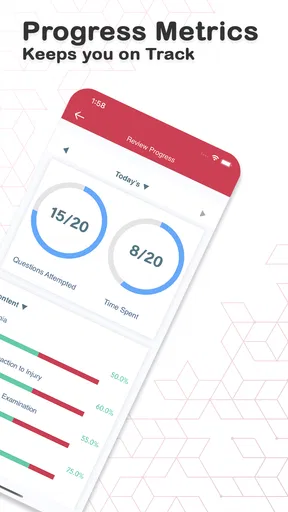
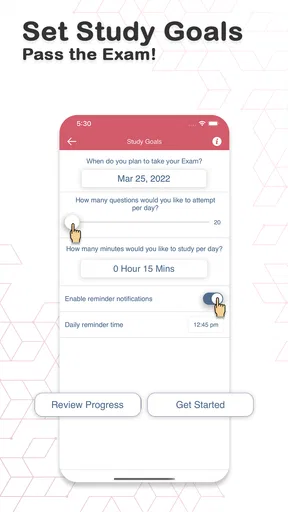
On the technical side, the current version is 4.16.0 and it supports devices running Android 5.0 or later. I would still judge it primarily as a study resource rather than as a polished productivity system. Its usefulness comes from the content and the review method. Anyone expecting elaborate planning tools, a full progress dashboard, or the broadest possible exam simulation may find the experience more limited than a dedicated premium question platform.
The limitations I would consider before relying on it
The biggest limitation is scope. A collection of pathology questions can strengthen reasoning, but it cannot cover every detail required for a comprehensive medical examination. I would not let successful sessions create false confidence. If I repeatedly perform well in one chapter, I still need to verify that I understand the subject in unfamiliar wording and can connect it with pharmacology, physiology, microbiology, and clinical management where appropriate.
The rationale format has a second trade-off. Explanations are valuable after an attempt, but they may not be enough for a learner who needs a complete first introduction. If I do not understand the underlying science, the answer may tell me what the correct relationship is without giving me all the teaching structure needed to build it from scratch. In that situation, a textbook, lecture, or faculty explanation is the better first stop.
There is also a risk of studying to the app's patterns. Repeated exposure to a familiar style can make me better at recognizing how a question is written without making me equally strong at solving a new presentation. To avoid that, I would mix these questions with material from another source and occasionally explain the diagnosis or mechanism in my own words before looking at the answer.
The purchase model deserves a realistic look as well. Free installation lowers the barrier to trying the app, but paid content means it may not remain a complete solution at no cost. I would not purchase automatically just because the app feels useful after a few questions. First, I would identify the exact pathology areas I need, compare the available item with my study schedule, and decide whether the added material fills a real gap rather than simply increasing the number of questions.
Finally, this is not the right choice for every learner. Someone who wants a highly adaptive platform that constantly adjusts difficulty, combines every medical subject, or provides a full-length exam simulation may prefer a larger question bank. Someone who is still learning basic pathology may need a more explanatory resource first. The app is strongest for targeted practice after initial learning, especially when the user is willing to review mistakes carefully.
Who should use it and who should skip it
I think it is a good fit for medical students in an active review phase, particularly those who want pathology questions grouped closely enough to expose recurring weaknesses. It can also help a learner preparing for a school assessment who has already covered the lectures and needs to move beyond rereading. The age rating is Everyone, but the subject matter is still academically demanding; the rating describes general content suitability, not the level of medical knowledge required.
I would recommend it to a friend who says, “I recognize pathology when I see it, but I struggle to answer questions without notes.” That person is likely to benefit from the app's central exercise: committing to an answer and then studying the reasoning. I would also recommend it to someone who has a limited study window and wants a focused session that can be repeated around other responsibilities.
I would steer away from it as a primary resource for a beginner who has not yet learned the basic mechanisms. I would also suggest a different option to a student whose main weakness is mixed-subject integration rather than pathology itself. In that case, a broader question bank may reveal more realistic transitions between disciplines. Likewise, if detailed analytics and a highly structured study plan are essential, the app may feel too focused on the questions themselves.
One useful way to decide is to test whether the rationales change your review behavior. If you read them actively, compare distractors, and return to weak concepts, the app can earn a place in your routine. If you only check the correct letter and move on, much of its value disappears. The content is not a shortcut around learning; it is a tool for making learning more accountable.
My final recommendation
After using it as a focused pathology companion, I would describe Board Review Series-Pathology as a practical but deliberately limited study app. Its central strength is the combination of USMLE-style questions with end-of-chapter answers and rationales. That structure supports active recall, exposes gaps that passive reading can hide, and works well in short sessions.
Its weaknesses are equally clear: it should not replace a foundational resource, it may not satisfy students who want broad exam simulation or advanced tracking, and the in-app purchase range means the free installation is only the starting point for evaluating the full experience. Those are not small details, but they are manageable if I use the app for the job it handles best.
For me, the right verdict is conditional but positive. Choose it for focused pathology practice after you have learned the essentials, and use the rationales as a map back to your main resources. Skyscape Medpresso Inc has made a study tool that can turn familiar material into a more demanding retrieval exercise. I would recommend it to a targeted learner who wants to find and repair pathology weaknesses, while advising anyone seeking a complete all-in-one board preparation system to look beyond it.
Pros
- Concise pathology summaries make last-minute revision more manageable.
- High-yield topics are organized in a familiar board-exam format.
- Practice questions help reinforce key disease mechanisms and findings.
- Useful for reviewing pathology terminology on a phone or tablet.
- Content can complement lectures
- textbooks
- and clinical question banks.
Cons
- The dense material may feel overwhelming for students new to pathology.
- Some explanations lack the depth needed for complete topic mastery.
- Question coverage may not match every school or licensing exam blueprint.
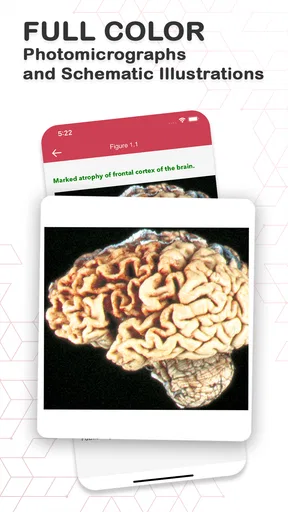
- A small screen can make tables
- images
- and annotations harder to use.
- Users may need other resources for updated guidelines and clinical context.
FAQs for Board Review Series-Pathology
What is Board Review Series-Pathology, and who is it designed for?
Board Review Series-Pathology is a medical study resource focused on reviewing high-yield pathology concepts commonly tested in medical school and board-style examinations. It is primarily designed for medical students, especially those preparing for pathology courses, comprehensive exams, or licensing tests. The material may also help residents and healthcare learners refresh essential disease mechanisms, clinical findings, and diagnostic principles.
What topics are covered in the Board Review Series-Pathology app?
The app generally focuses on core pathology areas, including cellular injury, inflammation, neoplasia, hematologic disorders, cardiovascular disease, respiratory conditions, gastrointestinal pathology, renal disease, endocrine disorders, reproductive pathology, and nervous system disorders. Content is usually organized around concise explanations and exam-oriented facts, making it useful for reviewing mechanisms, signs and symptoms, laboratory findings, and classic associations.
Can this app replace a pathology textbook or formal medical instruction?
No. Board Review Series-Pathology should be treated as a review and revision tool rather than a complete replacement for lectures, textbooks, laboratory sessions, or guidance from qualified instructors. Its concise, high-yield style is helpful for reinforcing information and identifying commonly tested concepts, but users may need more detailed sources to understand difficult subjects, rare diseases, updated guidelines, or complex clinical decision-making.
Does Board Review Series-Pathology include practice questions or exam-style review features?
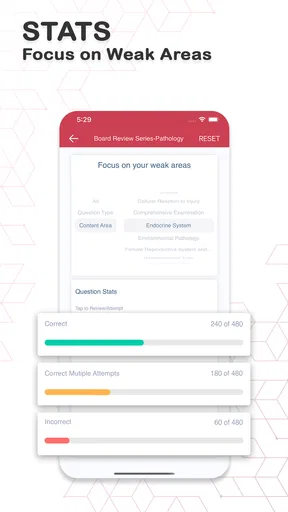
Depending on the version and platform, the app may include review questions, quizzes, or question-and-answer material designed to test recall of important pathology concepts. These features can be useful for active learning and identifying weak areas, but users should check the current app description before downloading because available tools, question counts, explanations, and subscription requirements can change between releases.
Is Board Review Series-Pathology suitable for studying offline, and does it require payment?
Offline access and pricing depend on the specific edition, operating system, and distribution method. Some versions may allow users to download content for study without an internet connection, while others may require online access or an account. Before installing, review the store listing for the latest information about free features, one-time purchases, subscriptions, advertisements, supported devices, and any limitations on accessing the full pathology content.


